
When your air conditioner is no longer keeping up—or a repair estimate is high enough to make you reconsider the whole system—shopping for a replacement can get complicated quickly. Contractors may recommend different brands, equipment sizes, and efficiency levels, yet the estimates don’t always explain why one option is better suited to your home. The real challenge is figuring out what you’re paying for and whether it will solve the problem that led you to consider replacement.
If you’re planning AC installation in Tulsa, a good decision begins with an assessment of the existing equipment and the house itself. Before comparing prices, you should understand whether the old system is worth repairing, how a replacement will be sized, whether the ductwork needs attention, and what each contractor is including in the job. This guide walks through those decisions so you can compare proposals with greater confidence.
Start with the house, not the brand. The best proposal explains the system size, the work included, and how the installation will address your home’s actual cooling problems.
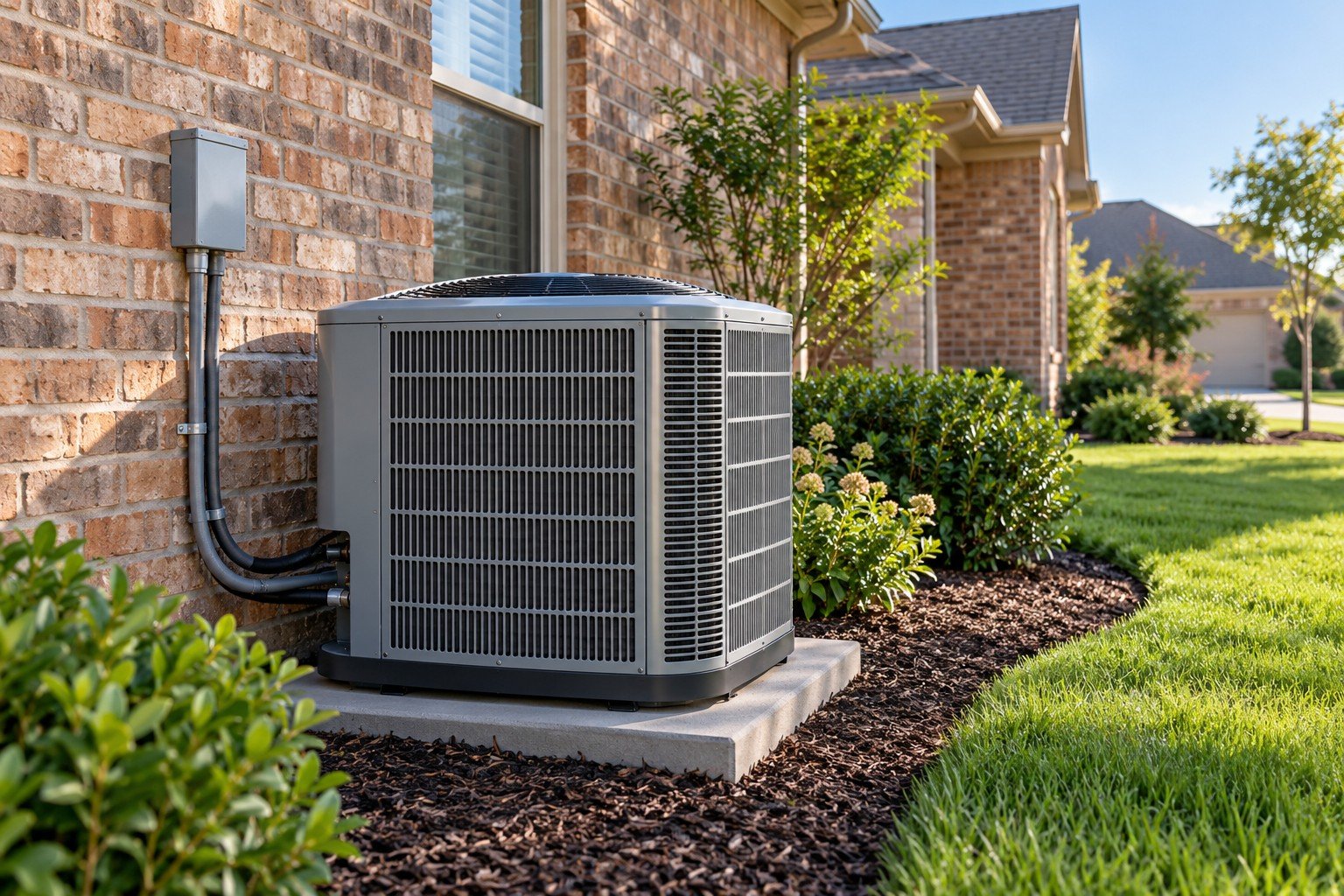
Repair first, or replace the air conditioner?
A failed compressor, refrigerant leak, or recurring electrical problem may make replacement worth considering, but no single symptom proves a new system is necessary. Ask for a diagnosis that identifies the failed component, explains the proposed repair, and separates immediate work from optional improvements. Compare that cost with the condition of the rest of the equipment, its service history, and how well it cooled before the failure.
Comfort complaints deserve their own investigation. A back bedroom that never cools, high indoor humidity, or unusually long run times may involve duct leakage, poor return airflow, insulation, or controls rather than the outdoor unit alone. Replacing equipment without identifying the cause can leave the original problem in place. For symptoms and homeowner-safe checks, see our Tulsa AC repair guide.
Before replacing a working system: If the main complaint is one hot room or poor airflow, ask the estimator to check ductwork and insulation before recommending a larger unit.
Your home matters more than the equipment label
Tulsa’s mix of established neighborhoods and newer suburban construction means an installer may encounter very different homes within the same service area. An older house near Brookside or Midtown may have been renovated over time, while a newer home in Jenks or Broken Arrow may have a different insulation package and duct layout. Neighborhood alone does not tell you how well a house performs, but it does show why a contractor should inspect the actual home instead of recommending equipment based only on its square footage or the size of the old unit.
Humidity matters, too. Cooling equipment removes moisture as it operates, but the results depend on proper sizing, airflow, controls, and operating conditions. A unit that is too large may satisfy the thermostat quickly without running long enough for comfortable moisture removal. Rather than asking for the biggest unit that fits, ask how the proposed system will handle both temperature and humidity on typical summer days.
Sizing: the question to ask before discussing brands
An installer should not size your new air conditioner solely from square footage or the capacity of the old one. An appropriate residential cooling-load calculation—often called Manual J—considers the home itself, including windows, insulation, infiltration, and local design conditions. Equipment selection should then match the calculated load and the manufacturer’s performance data. ENERGY STAR also recommends proper load calculations rather than rules of thumb.
If a contractor proposes the same tonnage as your existing system, ask what supports that choice. The previous equipment may have been correctly sized, but it might also have been oversized from the start or installed before improvements to windows or insulation. A credible answer explains the calculation and what was actually measured or inspected. See ENERGY STAR’s guidance on sizing and installation.
A useful question for the estimator
“Can you show me how you determined the cooling load for this house, and explain why the equipment you selected matches it?” A clear answer is more useful than a promise that a larger system will cool faster.
What should the installation quote actually cover?
A written estimate should identify exactly which equipment is being installed and what work the price covers. At a minimum, look for the make and model of the outdoor air conditioner, the matching indoor coil or air handler, the equipment’s efficiency rating, and the installation labor. If your home has a gas furnace, ask whether it will remain in place and how the new cooling equipment will be matched to it. A quote that says only “new 3-ton AC installed” leaves too many important questions unanswered.
Next, ask what happens to the parts of the system that are not being replaced. Will the contractor inspect the ductwork, refrigerant lines, electrical connections, and condensate drain? If any of those need repairs, are the repairs included in the price or billed separately? The estimate should also state who handles required permits, who removes the old equipment, and what testing will be performed before the job is considered complete. Finally, it should explain the payment schedule and require your approval before additional charges are added. Use the comparison below to spot differences between bids.
Five details worth checking on every quote
Equipment: Does the estimate identify both indoor and outdoor components by model number?
Sizing: Was the capacity selected using a current cooling-load assessment rather than copying the old unit?
Ductwork: Is inspection included, and are sealing or repairs priced separately?
Warranty: Which parts and labor are covered, for how long, and who registers the equipment?
Completion: What startup, airflow, and refrigerant checks will be performed and documented?
What makes up a central AC installation?
In a typical split central-air system, cooling depends on several connected components. Ask which ones your estimate replaces or reuses.
Outside
Condenser and compressor release heat outdoors.
Connection
Refrigerant lines connect indoor and outdoor equipment.
Inside
Evaporator coil and blower cool and circulate indoor air.
Illustrative component overview—not a wiring or refrigerant schematic. Ductwork, drainage, controls, and electrical connections also need evaluation.
How much does AC installation cost in Tulsa?
AC REPLACEMENT COST SNAPSHOT
$5,000–$8,300
What this range covers: According to HomeGuide, an installed, entry-level central air-conditioning replacement costs an estimated $5,000–$8,300 in a roughly 2,000-square-foot home, assuming the existing ductwork does not need to be changed. It is a national cost benchmark, not a Tulsa average or a quote for your home. The final price can change with the cooling capacity your house needs, the equipment selected, labor, and any necessary work on ducts, electrical connections, or the indoor system.
That national estimate is a starting point for budgeting, not a promise about what an installation in Tulsa will cost. Replacing an existing matched AC system with usable ducts and wiring is different from installing new ductwork, replacing a furnace or air handler, or making major electrical changes. The size and efficiency of the equipment also affect the price. When you request estimates, ask each company to separate the base replacement from recommended upgrades so you can see what accounts for the difference.
Efficiency, heat pumps, and long-term comfort
Higher-efficiency equipment can reduce electricity use under suitable conditions, but the value of an upgrade depends on your usage, utility rates, installation quality, and the price difference. Ask for the exact model specifications and an explanation of how a proposed variable-speed or multi-stage system would address your comfort concerns. Better equipment cannot compensate for badly designed ductwork or an incorrect installation.
A heat pump is another option worth discussing, particularly if you are replacing both cooling and heating equipment or have a relatively new furnace that could be paired with a heat pump in a dual-fuel arrangement. Tulsa has substantial cooling demand and a winter heating season, so compare both functions. Do not assume a heat pump is automatically the best or worst choice; request a proposal based on your home and operating priorities.
Choosing a qualified Tulsa-area installer
In Oklahoma, HVAC contracting is a licensed trade. Before hiring a Tulsa-area installer, use the Oklahoma Construction Industries Board’s license lookup to verify the contractor’s current credentials, and ask for proof of insurance. The Board also recommends obtaining at least three estimates. Ask who will supervise the work and who is responsible for permits and inspections. Requirements can differ between Tulsa and surrounding municipalities, so confirm the rules for your actual address with the appropriate local building department.
A useful estimator should inspect the equipment and home, explain the sizing method, identify potential duct or electrical issues, and provide a written scope. Ask who registers manufacturer warranties, what labor warranty the installer provides, and whom to contact if the system does not perform as expected. Pressure to sign immediately is not a substitute for clear documentation.
What happens on installation day—and afterward?
The installation crew typically removes the equipment being replaced, prepares the new components and connections, and performs system startup and safety checks. The exact work depends on the system. Refrigerant handling and electrical work belong with qualified professionals; homeowners should not attempt those tasks. Before the crew leaves, ask for a walkthrough of the thermostat, filter access, condensate maintenance, and any operating instructions specific to the new equipment.
Keep the final invoice, model and serial numbers, warranty paperwork, permits or inspection records when applicable, and any documented commissioning results. If one part of the house remains uncomfortable, report it promptly and describe the conditions when it occurs. Our Tulsa HVAC maintenance guide explains what routine service should cover after installation.
Before signing a Tulsa AC installation contract
Get the equipment models, sizing explanation, itemized work scope, change-order process, warranty terms, and expected completion schedule in writing. Keep a copy of each estimate so you can compare proposals on equal terms.
Getting ready to request AC installation estimates
Before contacting installers, note your current system’s approximate age and model number, the problems you’ve noticed, and whether you’re considering replacing only the air conditioner or other heating and cooling equipment as well. If you have recent repair invoices or know about persistent hot rooms, airflow issues, or ductwork problems, share those details during the assessment. They can help a contractor evaluate the house instead of quoting equipment based on square footage alone.
Ask each company to provide a written estimate with equipment model numbers, sizing rationale, included work, warranty terms, and any additional work priced separately. Comparing that information is more useful than choosing solely by the lowest headline price.
Home Climate Advisor provides independent educational information; we do not currently install equipment or dispatch contractors. For other heating and cooling decisions, visit the Tulsa HVAC services hub.