
TULSA HOMEOWNER GUIDE · ROUTINE HVAC SERVICE
An HVAC service visit should help you understand how your system is performing, what needs attention now, and what can wait. For Tulsa homeowners, scheduling air-conditioning maintenance in March or April leaves time to investigate weak airflow, uneven cooling, or drainage trouble before the hottest part of summer. The local weather makes that timing practical: Tulsa’s normal July high is 93.6°F and its normal overnight low is 73.1°F, according to the National Weather Service’s 1991–2020 climate data. When nights stay warm, a struggling AC system may have little opportunity to catch up.
Heating equipment deserves its own attention. Tulsa’s normal January low is about 28°F, according to the National Weather Service’s January climate normals, so September or October is a sensible time to discuss a furnace or heat-pump check. Tell the contractor what equipment you have and whether you want a routine inspection or help with a specific symptom. Ask what the quoted service includes; advertised tune-ups do not all cover the same checks.
A practical Tulsa service calendar
SPRING · MARCH–APRIL
Prepare for cooling season
Arrange an AC check before Tulsa’s summer heat. Mention poor airflow, uneven temperatures, or drainage issues when you schedule.
FALL · SEPTEMBER–OCTOBER
Prepare for heating season
Discuss furnace safety and performance checks, or a heat-pump inspection, before colder nights become more common.
What should an HVAC service appointment include?
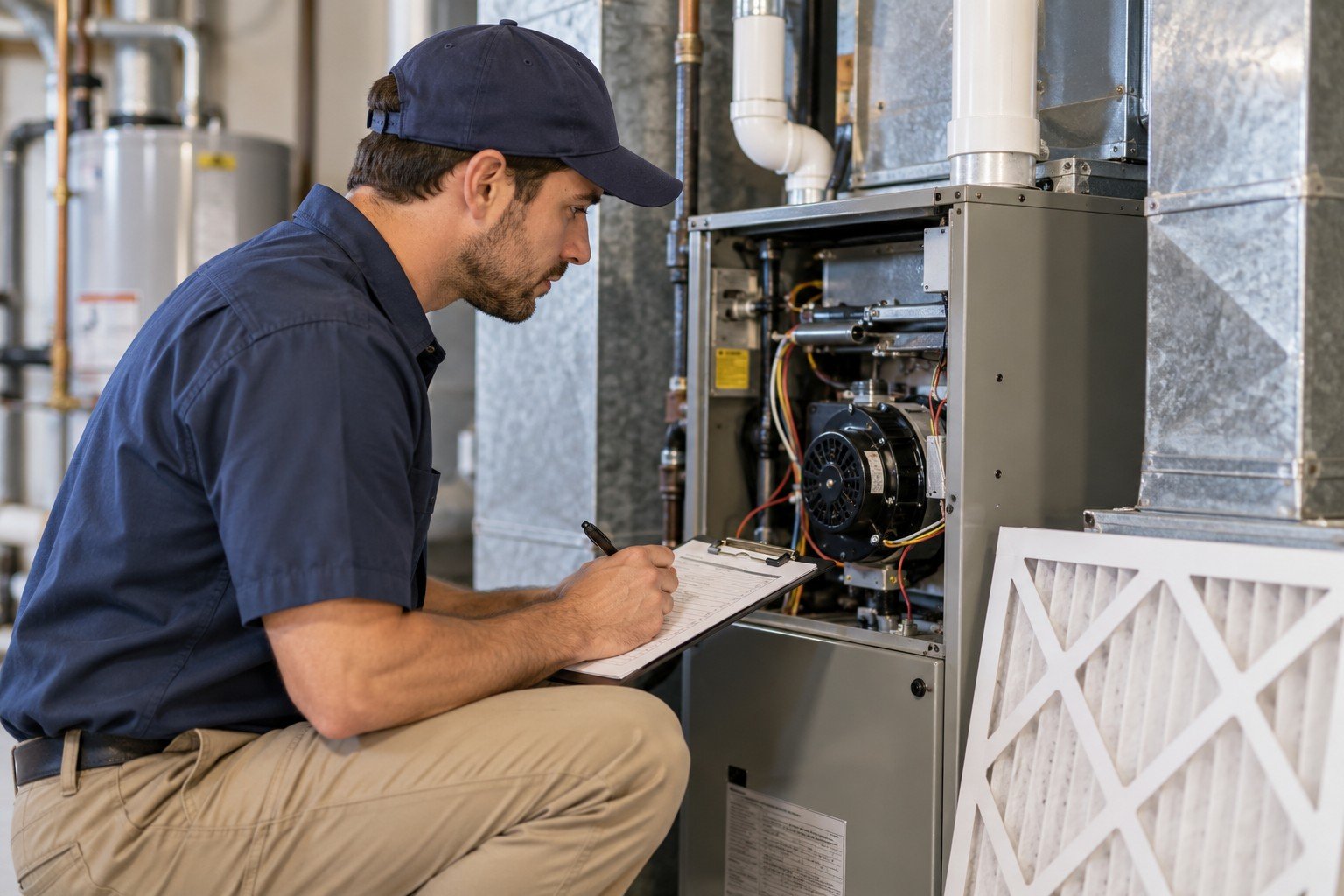
A useful maintenance appointment goes beyond a quick visual glance. The technician may inspect accessible components, evaluate airflow and operating performance, review the thermostat and controls, and check for signs of wear or drainage trouble. The appropriate checks depend on whether you have a central air conditioner, heat pump, gas furnace, or another system.
For cooling equipment, ask whether the visit includes an inspection of the condensate drainage system, the outdoor unit’s condition, electrical connections, and system operation. For heating equipment, ask what safety and performance checks are included for your specific fuel type and equipment. A contractor should explain findings in plain language rather than describing every recommendation as an emergency.
Filter replacement, coil cleaning, refrigerant diagnostics, and parts are not automatically included in every advertised tune-up. Some may be separate charges or appropriate only when testing indicates a need. Request an itemized scope before agreeing to extra work.
When should Tulsa homeowners schedule maintenance?
The spring and fall windows above are planning suggestions, not a universal service schedule. The right timing depends on your system: a heat pump handles both heating and cooling, while a separate furnace and air conditioner have different components and inspection needs. If you have recently noticed short cycling, unusual sounds, or reduced comfort, describe those symptoms when booking instead of waiting for the next seasonal appointment.
Check the maintenance intervals in your equipment manual and any applicable warranty terms. Age, operating conditions, and previous problems may affect what a technician recommends. Ask the contractor to explain why a particular interval or procedure fits your equipment rather than accepting a one-size-fits-all service package.
Maintenance or repair? A system that runs normally but is due for its seasonal check is a maintenance appointment. If cooling has stopped, a breaker repeatedly trips, or you notice an unusual burning smell, describe the symptom when you call rather than booking a basic tune-up. See our Tulsa AC repair guide or Tulsa furnace repair guide for help evaluating those situations.
What affects the cost of a tune-up?
There is no single meaningful price for every Tulsa HVAC maintenance visit. The equipment type, number of systems, accessibility, work included, and whether cleaning or repairs are needed all affect the final bill. A low advertised inspection price may not cover the same tasks as a more comprehensive maintenance appointment.
Ask whether the quoted amount covers the diagnostic or inspection work, what additional charges require approval, and whether a written summary is provided. If a company offers a service agreement, compare its total annual cost, covered visits, exclusions, cancellation terms, and any claimed priority scheduling. A discount on future repairs has value only if its terms are clear and you would otherwise use the service.
How to evaluate a Tulsa HVAC service provider
Look for a company willing to explain its maintenance process before you commit. Ask who will perform the visit, whether the business carries appropriate licensing and insurance for the work, and how it documents problems it finds. You can also ask whether a second system, older equipment, or a heat pump changes the scope of the appointment.
During the visit, a useful technician report should distinguish observations from recommendations. For a proposed repair, request the reason for the work, an itemized estimate, and whether the system can be operated safely while you consider your options. Be cautious about pressure to approve a major replacement based only on the age of the equipment or a vague statement that it is “about to fail.”
What can you safely do between service visits?
Homeowners can often help a system operate as intended by checking the filter according to the manufacturer’s instructions, keeping supply and return vents unobstructed, and maintaining clear space around the outdoor unit without opening the cabinet. Pay attention to new noises, water where it should not be, or a noticeable change in heating or cooling performance. Write down when a symptom occurs so a technician has useful information.
Do not open electrical compartments, test live components, handle refrigerant, bypass safety devices, or attempt gas-furnace adjustments. If you suspect a gas leak, leave the area and follow your gas utility’s emergency guidance. Smoke or an immediate fire hazard warrants emergency services. For urgent loss of heating or cooling, our Tulsa emergency HVAC guide explains how to think through the situation.
Plan the visit around your equipment—not a sales pitch
Before you call, note the equipment type, any recent repairs, and the symptoms you want checked. Ask for the proposed inspection scope and price in writing. After the visit, keep the technician’s findings with your equipment records; they can help you decide whether routine care is enough, a repair is warranted, or a second opinion would be useful.
Home Climate Advisor is an independent informational resource, not an HVAC contractor or dispatch service. If you live in Tulsa or a nearby community such as Broken Arrow, Jenks, Bixby, or Owasso, confirm each company’s service area and pricing before booking. For related guidance, see our Tulsa HVAC services hub.